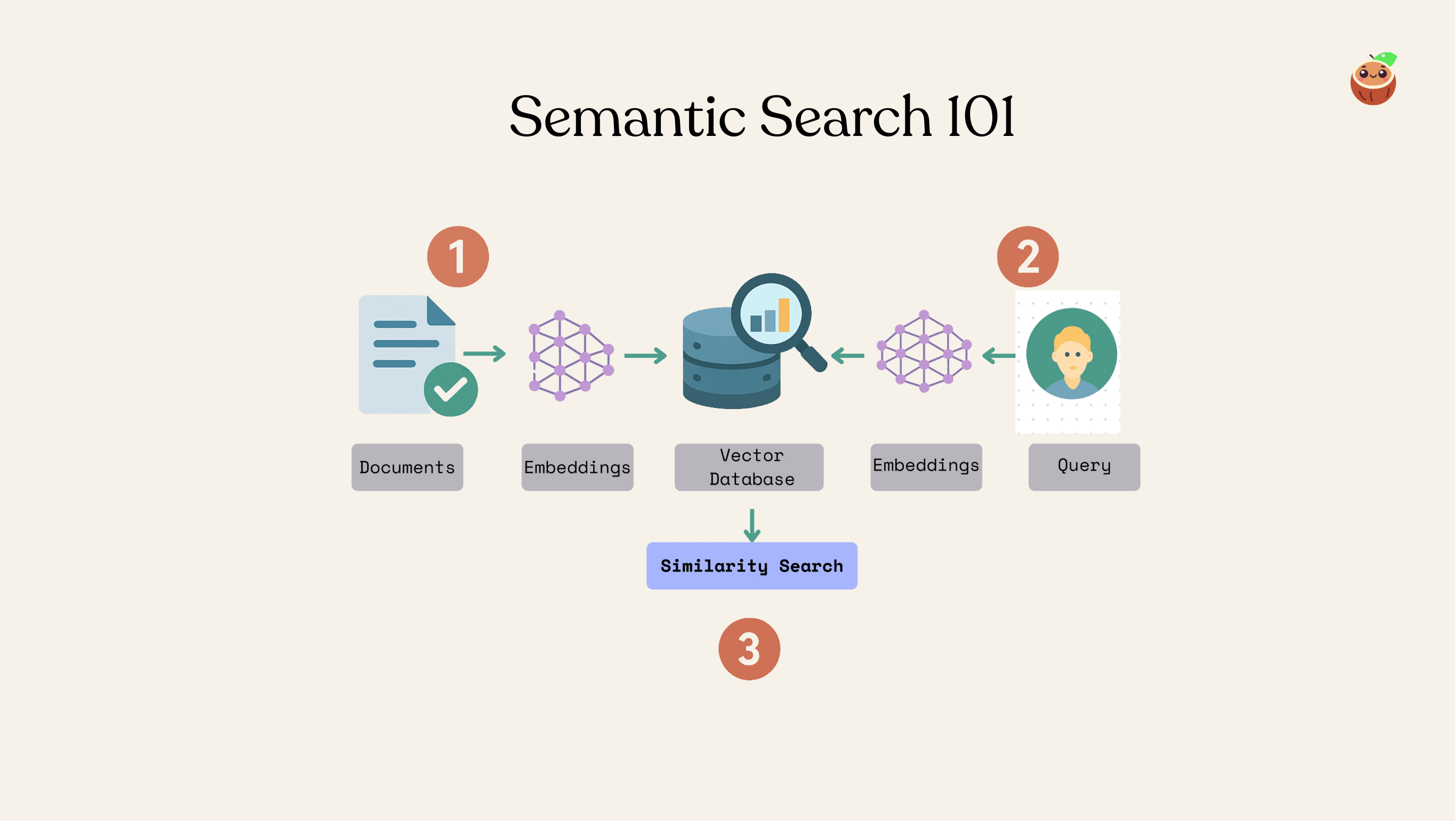
We’ll take a folder of Markdown files and turn it into a vector index you can search in plain English — the foundation under every RAG and semantic-search system. Point it at your docs, and “how does incremental processing work?” finds the right passage even when it shares no keywords with the text.
The whole pipeline is ordinary async Python and your own types. The heavy lifting — incremental processing, change tracking, managed targets — runs in a Rust engine underneath, so only what changed gets re-embedded and re-upserted.
Flow overview
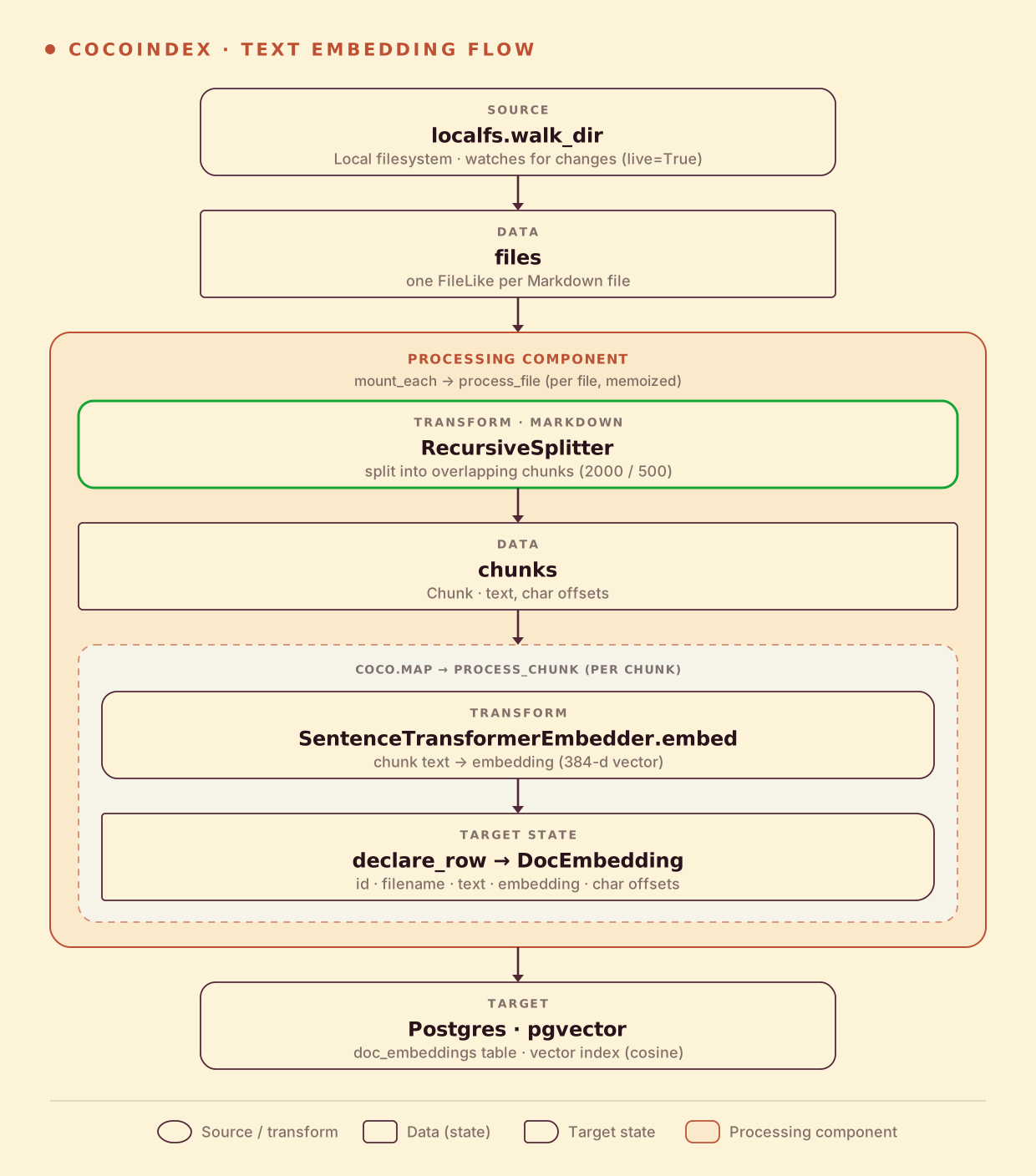
From a high level, these are the steps:
- Read Markdown files from a local directory.
- Split each file into overlapping chunks, then embed every chunk.
- Store the chunks and their embeddings in Postgres (as target states).
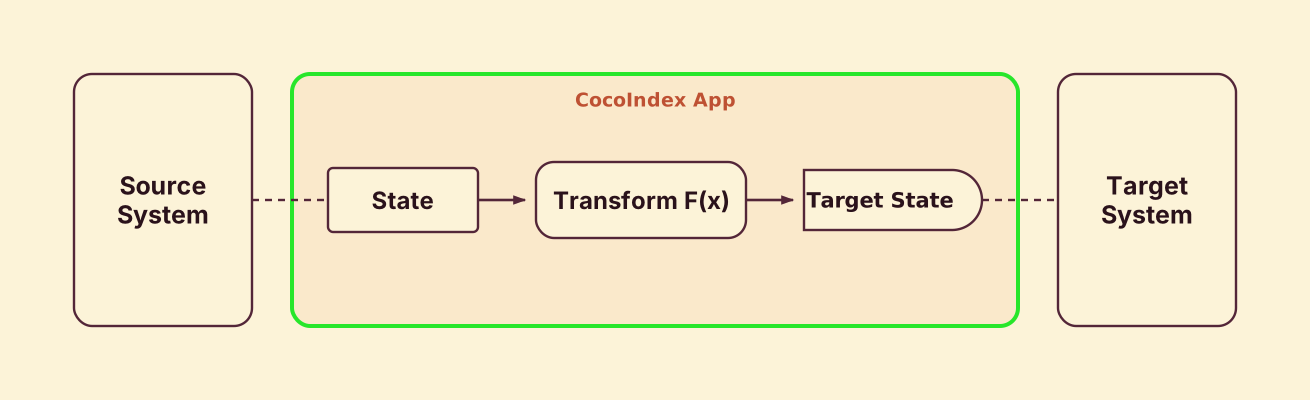
You declare the transformation logic with native Python, without worrying about how updates propagate. Think: target_state = transformation(source_state).
New to embeddings? An embedding is a list of numbers (a vector) that captures the meaning of a piece of text, so passages with similar meaning land close together in vector space. A vector index stores those vectors and finds the nearest ones to your query fast. That’s what lets search match by meaning instead of exact words.
Setup
-
A running Postgres with the pgvector extension. CocoIndex supports many targets, so you can pick another store.
export POSTGRES_URL="postgres://cocoindex:cocoindex@localhost/cocoindex" -
Install CocoIndex and the dependencies this example uses:
pip install -U "cocoindex[postgres,sentence_transformers]" asyncpg pgvector numpy python-dotenv -
A few
.mdfiles to index. Grab the sample files from the repo, or drop your own notes into amarkdown_files/directory.
Define the data and shared resources
Apps are the top-level runnable unit in CocoIndex. Before the App, we set up two things the rest of the code builds on. DocEmbedding defines one row of the output table — each chunk of text becomes one row, with its filename, location, text, and embedding vector. coco_lifespan provides the shared resources every step needs — the Postgres connection pool and the embedding model — once at startup.
import os
import pathlib
from dataclasses import dataclass
from typing import AsyncIterator, Annotated

import asyncpg
from numpy.typing import NDArray

import cocoindex as coco
from cocoindex.connectors import localfs, postgres
from cocoindex.ops.text import RecursiveSplitter
from cocoindex.ops.sentence_transformers import SentenceTransformerEmbedder
from cocoindex.resources.chunk import Chunk
from cocoindex.resources.file import FileLike, PatternFilePathMatcher
from cocoindex.resources.id import IdGenerator

DATABASE_URL = os.getenv("POSTGRES_URL", "postgres://cocoindex:cocoindex@localhost/cocoindex")
TABLE_NAME = "doc_embeddings"
EMBED_MODEL = "sentence-transformers/all-MiniLM-L6-v2"

PG_DB = coco.ContextKey[asyncpg.Pool]("text_embedding_db")
EMBEDDER = coco.ContextKey[SentenceTransformerEmbedder]("embedder", detect_change=True)

_splitter = RecursiveSplitter()


@dataclass
class DocEmbedding:
    id: int
    filename: str
    chunk_start: int
    chunk_end: int
    text: str
    embedding: Annotated[NDArray, EMBEDDER]


@coco.lifespan
async def coco_lifespan(builder: coco.EnvironmentBuilder) -> AsyncIterator[None]:
    async with asyncpg.create_pool(DATABASE_URL) as pool:
        builder.provide(PG_DB, pool)
        builder.provide(EMBEDDER, SentenceTransformerEmbedder(EMBED_MODEL))
        yield
embedding: Annotated[NDArray, EMBEDDER] ties the vector column to the embedder, so its dimensions are inferred automatically — and if you swap the model later, CocoIndex notices (detect_change=True) and re-embeds.
Process a file
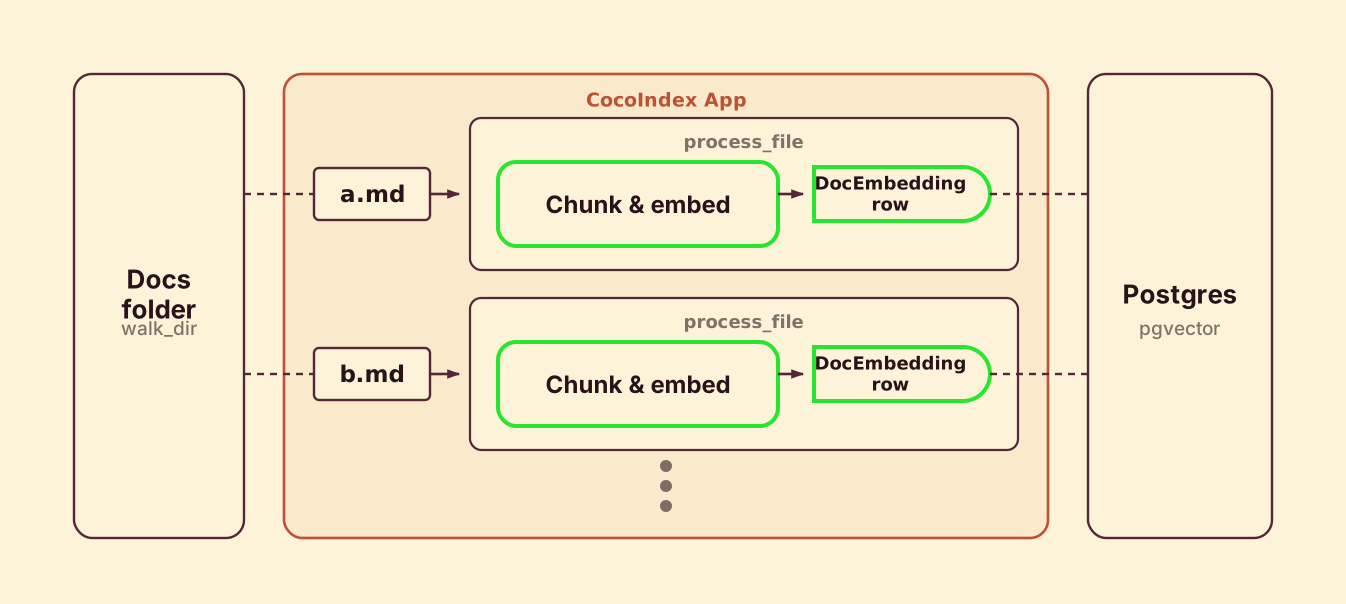
process_file runs once per file. It reads the file, splits the text into overlapping chunks, and maps each chunk to process_chunk.
@coco.fn(memo=True)
async def process_file(
    file: FileLike,
    table: postgres.TableTarget[DocEmbedding],
) -> None:
    text = await file.read_text()
    chunks = _splitter.split(
        text, chunk_size=2000, chunk_overlap=500, language="markdown"
    )
    id_gen = IdGenerator()
    await coco.map(process_chunk, chunks, file.file_path.path, id_gen, table)
Chunking keeps each embedded unit small and focused, and the overlap means an idea that straddles a boundary still lands whole in at least one chunk.
@coco.fn with memo=True is what makes this incremental: if a file’s content and this function’s code are both unchanged, the whole file is skipped on the next run. coco.map fans out to one process_chunk call per chunk.
Process a chunk
process_chunk embeds the chunk with the shared embedder and declares the target row.
@coco.fn
async def process_chunk(
    chunk: Chunk,
    filename: pathlib.PurePath,
    id_gen: IdGenerator,
    table: postgres.TableTarget[DocEmbedding],
) -> None:
    table.declare_row(
        row=DocEmbedding(
            id=await id_gen.next_id(chunk.text),
            filename=str(filename),
            chunk_start=chunk.start.char_offset,
            chunk_end=chunk.end.char_offset,
            text=chunk.text,
            embedding=await coco.use_context(EMBEDDER).embed(chunk.text),
        ),
    )
We use SentenceTransformerEmbedder with all-MiniLM-L6-v2 — a small, fast model that runs locally with no API key. There are 12k+ sentence-transformer models on Hugging Face, so swap in whichever you prefer. table.declare_row declares the row as a target state; CocoIndex handles inserting, updating, or deleting it to match.
Define the main function
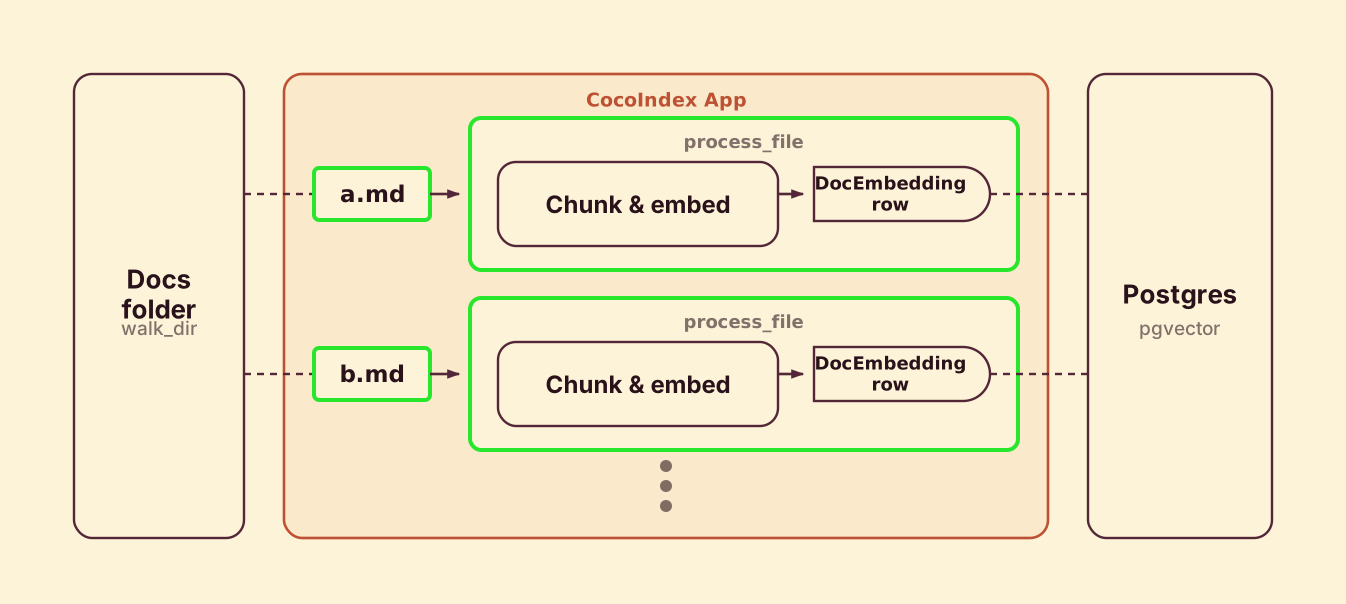
app_main wires the source to the target. It mounts the Postgres table (with a vector index), walks the source directory, and mounts one processing component per file.
@coco.fn
async def app_main(sourcedir: pathlib.Path) -> None:
    target_table = await postgres.mount_table_target(
        PG_DB,
        table_name=TABLE_NAME,
        table_schema=await postgres.TableSchema.from_class(
            DocEmbedding, primary_key=["id"],
        ),
    )
    target_table.declare_vector_index(column="embedding")

    files = localfs.walk_dir(
        sourcedir,
        recursive=True,
        path_matcher=PatternFilePathMatcher(included_patterns=["**/*.md"]),
        live=True,  # watch for changes; pass -L to `cocoindex update` to run live
    )
    await coco.mount_each(process_file, files.items(), target_table)
mount_table_target creates and manages the Postgres table for you: schema, the pgvector index, idempotent upserts, and orphan cleanup when a file disappears. live=True makes the filesystem source watch for changes, and mount_each runs one component per file so the engine can track and update them independently.
Create the App
Bind app_main into a coco.App and point it at the folder of Markdown files.
app = coco.App(
    coco.AppConfig(name="TextEmbeddingV1"),
    app_main,
    sourcedir=pathlib.Path("./markdown_files"),
)
That is the entire indexing path.
Run the pipeline
Run the cocoindex CLI to build and update the index. Choose catch-up (scan, sync, exit) or live (catch up, then keep watching):
# Catch-up run
cocoindex update main

# Live run: keep watching for file changes
cocoindex update -L main
Query the index
Match user text against the index with a plain SQL query, reusing the same embedder from the indexing flow so indexing and querying stay consistent.
async def query_once(pool, embedder, query: str, *, top_k: int = 5) -> None:
    query_vec = await embedder.embed(query)
    async with pool.acquire() as conn:
        rows = await conn.fetch(
            f"""
            SELECT filename, text, embedding <=> $1 AS distance
            FROM "{TABLE_NAME}"
            ORDER BY distance ASC
            LIMIT $2
            """,
            query_vec, top_k,
        )
    for r in rows:
        score = 1.0 - float(r["distance"])
        print(f"[{score:.3f}] {r['filename']}")
        print(f"    {r['text']}")
        print("---")
The <=> operator is pgvector’s cosine distance. We turn it into a similarity score and print the filename and the matching chunk. Run a search straight from the command line:
python main.py "what is self-attention?"The most semantically similar chunks come back ranked — even when they share none of the words in your query. That’s the whole point of a vector index.
Incremental updates
CocoIndex keeps the index in sync with your files and does the minimum work to get there. You never compute a diff or write update logic: you change something, and CocoIndex works out exactly what to embed, upsert, and delete. Two pieces make this work. @coco.fn(memo=True) decides what to recompute — a file is skipped when its content and the function’s code are both unchanged. mount_table_target decides what to write — each row’s id is derived from its chunk’s text, so it upserts only the rows that actually changed and deletes rows whose source is gone.
- A file is added — only that file is chunked and embedded, and its rows are inserted. The rest is untouched.
- A file is edited — it is re-chunked; chunks whose text is unchanged keep their
idand embedding and are left as-is, genuinely new chunks are embedded and inserted, and chunks that no longer exist are deleted. - A file is deleted — its rows are removed from the target automatically.
The same machinery covers logic changes too: tune the chunk size or swap the embedding model, and CocoIndex compares the new output against what is already in Postgres and applies only the difference. A catch-up run (cocoindex update main) does this once and exits; live mode (cocoindex update -L main) keeps watching and applies each change with low latency.
Run it
The full, runnable example is in the CocoIndex repo: examples/text_embedding. Once this clicks, Index Your Codebase is the natural next step — the same flow with syntax-aware chunking for code.